 TRAVEL THERE: MORE IMPRESSIONS OF CHICHEN ITZA
Last week I shared my first impressions of Chichen Itza. The longer I stayed the darker my thoughts became. As if in response to the cartwheeling girls in front of the pyramids, I felt the lives of the Mayans deserved to be carefully considered and now, days later, I am still pondering my observations.
Marketplace of the Macabre
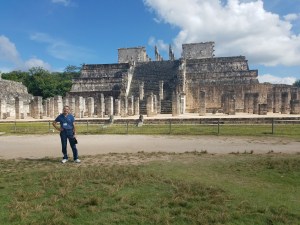
As if to emphasize my train of thought, I realized the structure adjacent to the altars was the marketplace. Beautiful rows of columns raised their heads to the sky, but like the Hypostyle Hall in Karnak, these columns once bore the weight of a heavy roof to protect the items of commerce available in the market. Like us, Mayan traders traveled to distant lands and brought back beautiful items used for adornment, which were sold next to agricultural products and weapons and cosmetics. Did the market close during the sacrifices? I doubt it. Instead, like a big box store getting ready for Black Friday, they’d hired extra help and filled their shelves with extra merchandise.
After showing us the main plaza and describing the crowds that once filled it during the days of sacrifice, our guide took us to the back of the pyramid where evidence of vandalism was apparent, but the vandalism is not recent. The Spanish came and disregarded the value of the Mayan ruins by peeling off layers of stone to build their own homes. The Spanish were not alone in this type of activity. The beautiful marble which once covered the Egyptian pyramids was used to build later monuments for people who saw little reason to protect the beauty of past engineers. How is that different from the cartwheeling girls?
 Men of Science
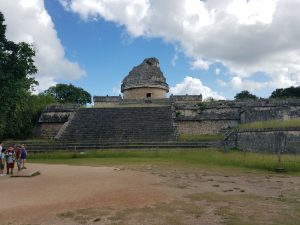
At the back of the pyramid, the guide gave us a choice. We could stay in the plaza to shop and take pictures or visit the observatory. I was hungry for more, so we followed the guide. Removed from the plaza, but still in the shadow of the pyramid stood an edifice for tracking the stars. They performed accurate science in this place, science that measured the routes of the stars and their dance across the sky. The statistics they calculated have proven to be as accurate as those of our own scientists, with their modern equipment, almost to the second.
The men of science in that day, knew from centuries of observation, the days would get longer, just as surely as they watched them get shorter. It had always been that way. Instead of proclaiming proven fact, they used their data to pick the day the sacrifices would be made. To declare the truth would have reduced their own power, so they ignored what they knew and instead worked hand-in-hand with the politicians, celebrities and leaders to deceive the general public – those standing below the pyramid and those falling lifelessly down the steps. Does that sound at all familiar to you? It does to me.
 The Pleasure Palace
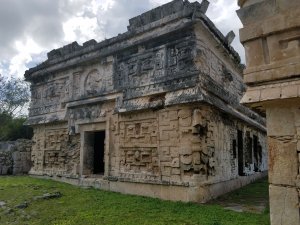
Just beyond the Observatory, still in sight of the pyramid, is a huge palace, mostly still standing. You can see intricate lattices of stone decorating the walls of the building, graceful columns in the walled garden and steps winding up to a balcony. Was the spot chosen for its proximity to the pyramid? Did they walk to the plaza or watch them from their pleasant garden? Who were the royals who lived in the shadow of so much death and right next door to a scientific institution that could have used their data to end the grisly performances of religion?
The palace marked the beginning of a residential area. Their neighbors were priests, other members of royalty, high level political appointees, the families of warriors and of the successful merchants whose businesses filled the market. Their primitive HOA offered a steam bath and water was delivered daily from the cenote by slaves. Other slaves brought food from the harvests to feed them. Their house slaves swept the floors, served their meals, dressed their hair and raised their children.
It was fantastic, this life the powerful had built for themselves. Certainly, it was also horrific, but did they notice or even care? What if you had lived in those times, at that place? Would you have joined the circus that protected your place in society or would you have lived each day in horror, wondering how your lone voice could make a difference against the odds?
If these impressions seem different to you from my usual travelogue, I must agree with you. They seem different to me, too. Wherever I travel and whatever I see, I try to put myself in the place of those who lived the life I am observing. I try to use their experiences to better understand what I observe in my own world. I’ve stood alongside ancient monuments like Stonehenge and the Temple at Karnack. I’ve visited magnificent cathedrals and breathtaking palaces. I’ve walked through significant battlegrounds and beautiful gardens. Never have I been as disturbed by what I saw as I was at Chichen Itza.
I’ve barely touched on the influence of the Spanish in Mexico. At Chichen Itza all you really see of them is the stones they took away from the pyramid, which is in many ways symbolic of the other things they took away. What they brought with them was a religion, which would replace the grisly sacrifices of thousands upon thousands with the sacrifice of One, but were they in truth any more benevolent than the murderous priests of Chichen Itza? Let’s talk about that next week.
 TRAVEL THERE: HEADING HOME IS ALWAYS GOOD
 TRAVEL THERE: HUMBLED BY THEIR HUMILITY
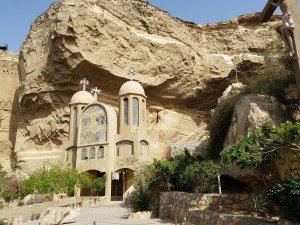 Mokattum Church
 After the tour, Bill visited the restroom and could not resist taking this picture. It broke our hearts. I thought of all our country club mega-churches with our slick-talking celebrity pastors. I thought of the people who prefer to participate in ministries that will take them on vacation mission trips. I thought of all the $1-3 donations people thoughtlessly tack onto their grocery bill or pet shop total, and then forget about by the time they get to their car. I thought of all the money we spend on saving cats and dogs, when these people so desperately need a little saving. How in the world does that stack up to the needs of those in Mokattum?
 TRAVEL THERE: WRAPPING UP OUR TOUR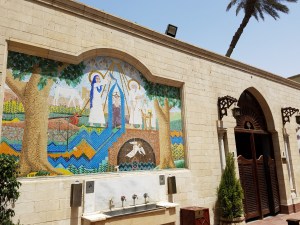
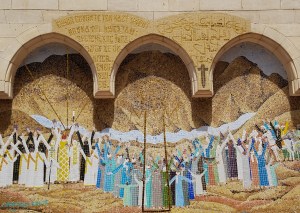
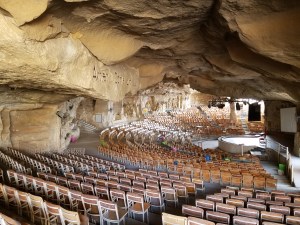
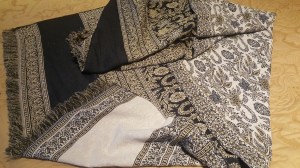 In recent years a church has been planted in a cavern out there at Mokattum and Bill and I would travel there before the day was over, but for now, I’ll round out my tour. On the way into the area I saw a shop selling shawls. I love shawls and capes. Bill promised we’d stop back by on the way out, probably thinking I would forget all about it – and who knows, I might have – but Zuzu remembered and now I have this beautiful shawl.


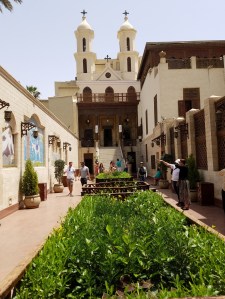
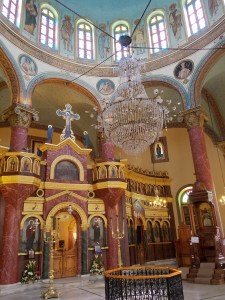
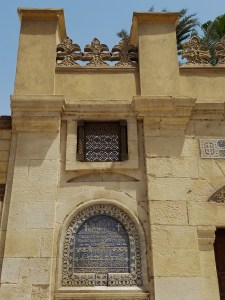 I have to confess to you that I’m not big on relics. I’ve seen more bones, scraps of fabric and hair than your average traveler, because I’m always interested in churches and many churches are interested in relics. Even palaces, like the Hofburg in Vienna, have their relics. In fact, I probably saw more relics in one place in the Hofburg’s Treasury than I have seen in any church.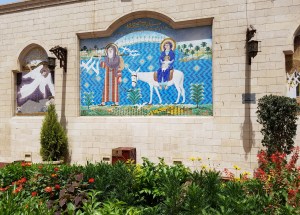
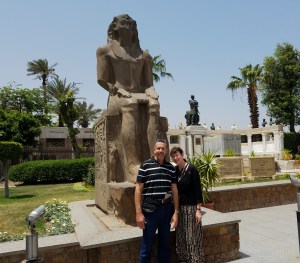 TRAVEL THERE: SAVING THE BEST FOR LAST?
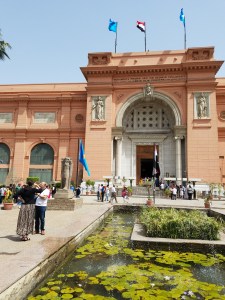 The Cairo Museum
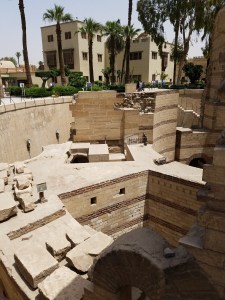 Old Cairo, Finally!
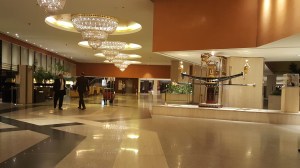 TRAVEL THERE: READY TO GO HOME
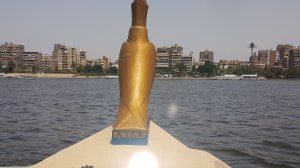 TRAVEL THERE: THE PHARAOH’S DINNER CRUISE
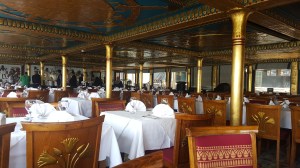 An Excellent Meal
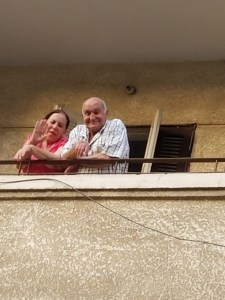
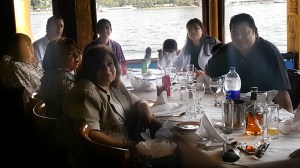 Before long Moksen and his lovely wife Shahira, first on the left side, were coming aboard and the party started. It was a huge, delicious meal and I was thrilled to be with my family once again.


 TRAVEL THERE: A FEW BITES


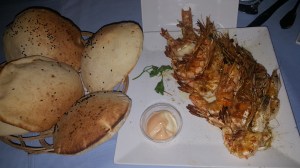 The Fish Market wasn’t quite what we expected. Yes there were big ice tables full of fresh fish, but from the description of the place we thought that once you picked your fish, then they’d give you a wide variety of ways to cook it. Basically you either got fried or grilled. It was good, but not our vision.
 jane sadek